
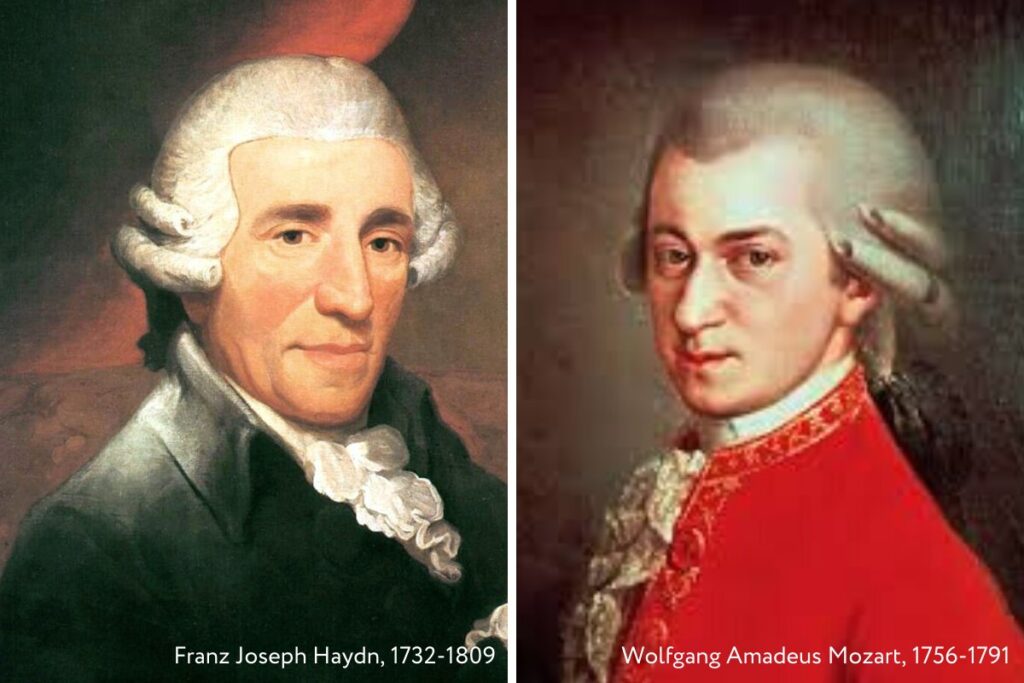
Exploring The Legacy Of Who Were Haydn And Mozart
Haydn and Mozart, two musical geniuses of the Classical era, revolutionized the world of music with their remarkable compositions. Haydn, often called the…
Haydn and Mozart, two musical geniuses of the Classical era, revolutionized the world of music with their remarkable compositions. Haydn, often called the “Father of the Symphony,” and Mozart, a child prodigy with unparalleled talent, left an indelible mark on the history of music. Their innovative styles and masterpieces continue to inspire generations of musicians and listeners alike. Dive into the lives and legacies of Haydn and Mozart to discover the brilliance that defined an era. Explore the enchanting world of music through the lens of these legendary composers.

Who Were Haydn and Mozart
When it comes to the world of classical music, two names stand out as giants whose compositions have stood the test of time – Joseph Haydn and Wolfgang Amadeus Mozart. These two composers, who were contemporaries in the late 18th century, played significant roles in shaping the development of classical music. Let’s delve into the fascinating lives and musical legacies of Haydn and Mozart to understand why they are considered musical geniuses.
The Life of Joseph Haydn
Joseph Haydn, born in Austria in 1732, was a prolific and influential composer of the Classical period. Often referred to as the “Father of the Symphony” and the “Father of the String Quartet,” Haydn’s music played a crucial role in the evolution of these forms.
Early Life and Musical Training
Haydn’s musical talent was evident from a young age. He received his early musical training as a choirboy at St. Stephen’s Cathedral in Vienna. Despite his humble beginnings, Haydn’s talents did not go unnoticed, and he soon caught the attention of influential patrons who supported his musical education.
Haydn’s early compositions were influenced by the Baroque style, but he later developed his unique voice and contributed significantly to the Classical music repertoire. His skills as a composer and conductor earned him prestigious positions, including working for the wealthy Esterházy family as Kapellmeister, where he had the freedom to experiment and innovate.
Haydn’s Musical Legacy
Haydn’s legacy is vast and enduring. He composed over 100 symphonies, numerous string quartets, piano sonatas, and operas. His music is known for its structural clarity, innovative use of form, and emotional depth. Haydn’s influence extended beyond his own time, with composers like Mozart and Beethoven acknowledging his impact on their work.
The Life of Wolfgang Amadeus Mozart
Wolfgang Amadeus Mozart, born in Salzburg, Austria in 1756, is one of the most iconic and influential composers in the history of Western music. Mozart’s prodigious talent and unparalleled gift for melody have earned him a place among the greatest composers of all time.
Child Prodigy and Musical Education
From a very young age, Mozart displayed exceptional musical abilities. He began composing music and performing in royal courts across Europe as a child prodigy. His father, Leopold Mozart, recognized his son’s talent early on and provided him with a thorough musical education, exposing him to a wide range of styles and genres.
By his teenage years, Mozart had already composed symphonies, operas, and chamber music, showcasing a level of maturity and sophistication that belied his youth. His innate musical genius allowed him to effortlessly blend technical prowess with emotional depth, creating music that continues to captivate audiences worldwide.
Mozart’s Musical Legacy
Mozart’s oeuvre includes over 600 compositions, spanning various genres such as symphonies, operas, chamber music, and concertos. His operas, in particular, are celebrated for their melodic beauty, dramatic depth, and psychological insight.
Despite facing financial challenges and personal struggles throughout his life, Mozart’s music remains a testament to his enduring legacy. His influence on subsequent composers, including Beethoven and Schubert, is immeasurable, and his works continue to be performed and admired by musicians and audiences alike.
Comparing Haydn and Mozart
While both Haydn and Mozart were prominent figures in the Classical music era, their styles and approaches to composition differed in many ways. Haydn’s music is characterized by its structural rigor, inventive use of form, and humor, while Mozart’s compositions are known for their elegance, lyricism, and emotional depth.
Collaboration and Influence
Haydn and Mozart had a significant impact on each other’s music. Mozart held great respect for Haydn’s works and learned from the elder composer’s mastery of form and structure. Haydn, in turn, recognized Mozart’s unparalleled talent and supported his development as a composer.
Their mutual admiration and friendship led to a fruitful exchange of ideas and musical innovation. Haydn’s symphonies and string quartets influenced Mozart’s compositions, while Mozart’s operatic works showcased a level of emotional expressiveness that Haydn admired.
Legacy and Enduring Influence
Both composers left behind a rich legacy that continues to shape the landscape of Western classical music. Haydn’s contributions to the symphony and string quartet genres laid the foundation for future composers, while Mozart’s operas and instrumental works remain staples of the classical repertoire.
Through their music, both Haydn and Mozart captured the spirit of their time while transcending the constraints of their era. Their enduring influence and timeless appeal serve as a testament to their genius and artistic vision.
In conclusion, Joseph Haydn and Wolfgang Amadeus Mozart were two titans of classical music whose innovative compositions and groundbreaking achievements continue to inspire musicians and audiences alike. Their unique voices, creative genius, and lasting impact on the development of Western music solidify their places as eternal icons of the classical era.
As we explore the music of Haydn and Mozart, we come to appreciate the depth of emotion, technical mastery, and sheer beauty that define their works. Their legacies serve as a reminder of the enduring power of music to uplift, inspire, and unite us across time and space.
The Friendship Between Haydn and Mozart
Frequently Asked Questions
Who were Haydn and Mozart?
Franz Joseph Haydn and Wolfgang Amadeus Mozart were both influential composers of the Classical period. Haydn, known as the “Father of the Symphony,” played a crucial role in developing the symphony and string quartet forms. Mozart, on the other hand, was a prodigy who composed hundreds of works across various genres, including operas, symphonies, and chamber music.
What was the relationship between Haydn and Mozart?
Haydn and Mozart were close friends and respected each other’s work. Haydn had a significant influence on Mozart’s music, especially in the realm of chamber music and symphonies. Mozart dedicated six string quartets to Haydn, showcasing their mutual admiration for each other’s talent.
How did the music of Haydn and Mozart contribute to the Classical period?
Both Haydn and Mozart were key figures in shaping the musical landscape of the Classical period. Haydn’s innovations in form and structure laid the groundwork for future composers, while Mozart’s melodic richness and emotional depth set new standards in musical expression. Their works epitomize the elegance, balance, and clarity characteristic of Classical music.
Final Thoughts
Haydn and Mozart were influential composers of the Classical era. Their music continues to inspire and captivate audiences worldwide. Haydn’s innovative symphonies and Mozart’s timeless operas showcase their genius. Through their compositions, Haydn and Mozart have left an indelible mark on the history of music. Their mastery and creativity set them apart as two of the greatest composers of all time.